


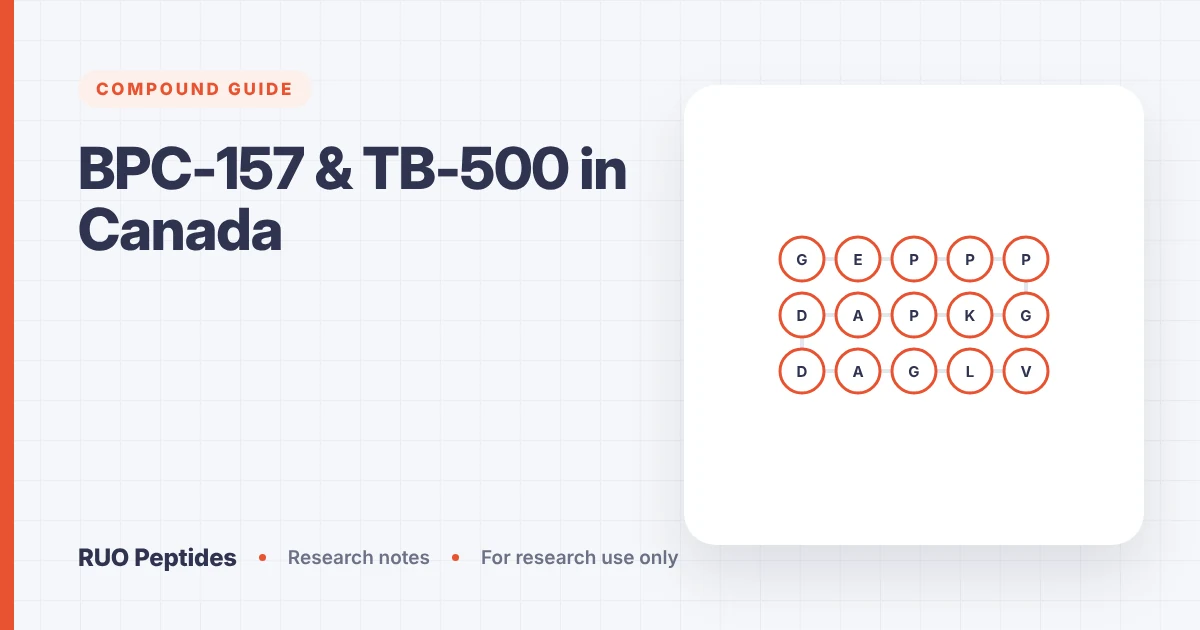
BPC-157 and TB-500 are two of the most widely discussed peptides in preclinical research, and they are often supplied together as a blend. They are unrelated molecules with different origins, so it helps to look at each one before considering the combined product.
- BPC-157 is a 15-amino-acid synthetic peptide. Most research is in cell and animal models.
- “TB-500” can mean a short thymosin β4 fragment or the full 43-residue protein. Only the CoA mass tells you which.
- A blend CoA should confirm each component separately.
- Both are named in Health Canada’s April 2026 advisory and on the WADA 2026 Prohibited List.
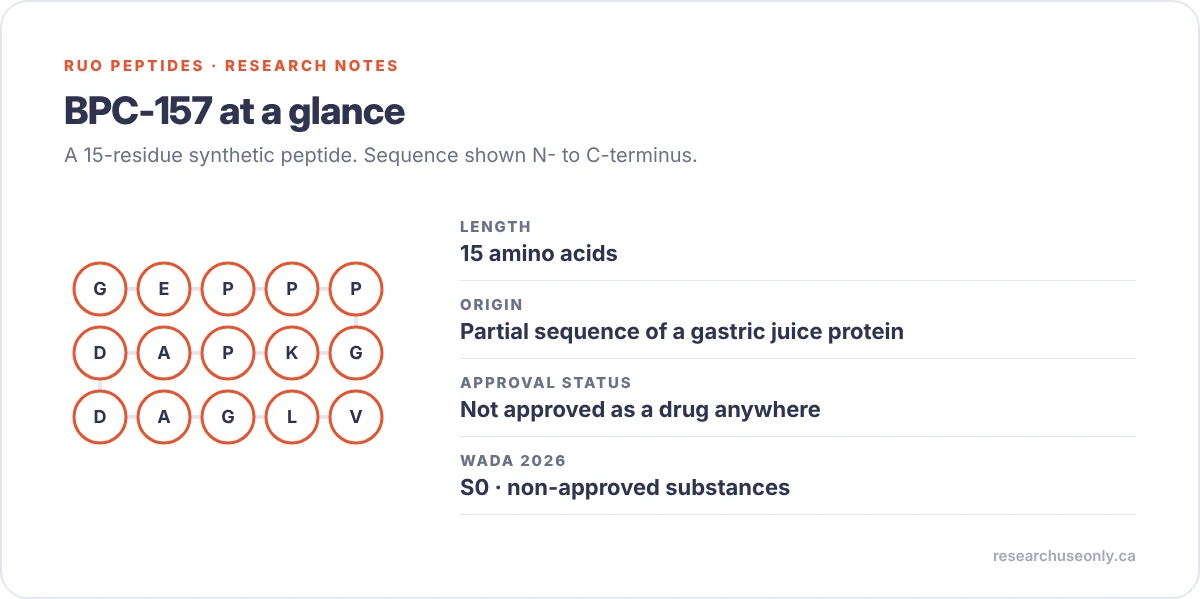
BPC-157 at a glance
| Sequence | Gly-Glu-Pro-Pro-Pro-Gly-Lys-Pro-Ala-Asp-Asp-Ala-Gly-Leu-Val |
| Length | 15 amino acids (pentadecapeptide) |
| Origin | Described as a partial sequence of a protein in human gastric juice |
| Research stage | Mainly cell culture and animal models |
| Approval status | Not approved as a drug in Canada or elsewhere |
| WADA 2026 | S0, non-approved substances |
The name stands for “body protection compound.” Much of the published work comes from a single research group at the University of Zagreb, and controlled human data are very limited.
TB-500 and thymosin beta-4
TB-500 is associated with thymosin beta-4, a naturally occurring 43-amino-acid protein involved in actin binding. The name “TB-500” is not used consistently. Some suppliers use it for a short synthetic fragment based on the actin-binding region of thymosin beta-4. Others use it for the full-length sequence.
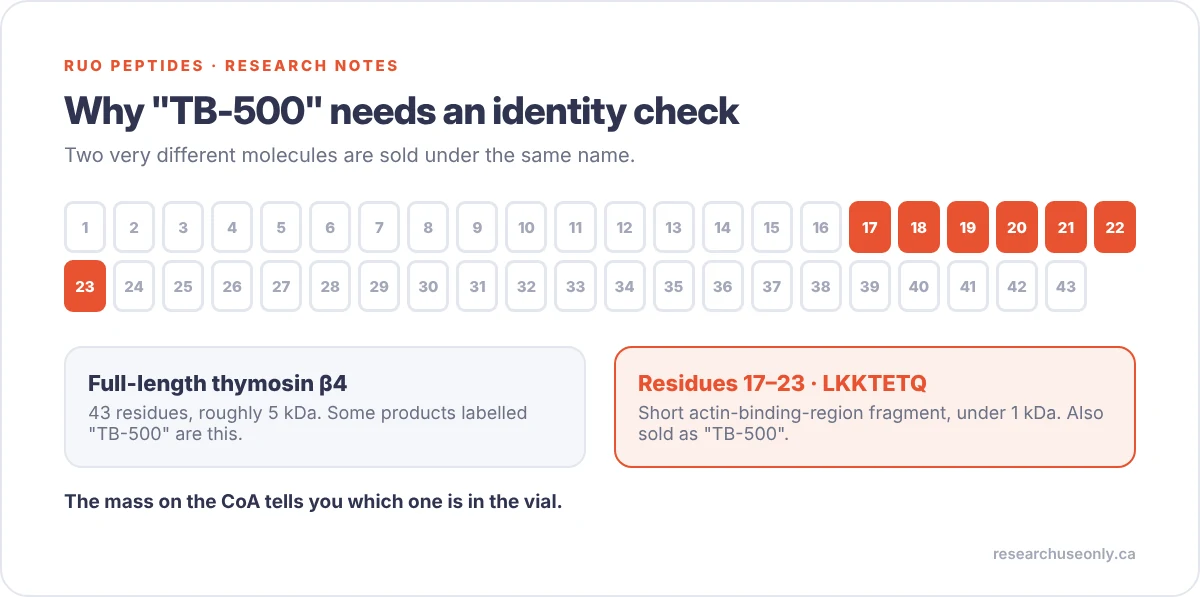
Because the two have very different molecular weights, the identity section of a CoA is the only reliable way to know which one a vial contains.
Documenting a blend
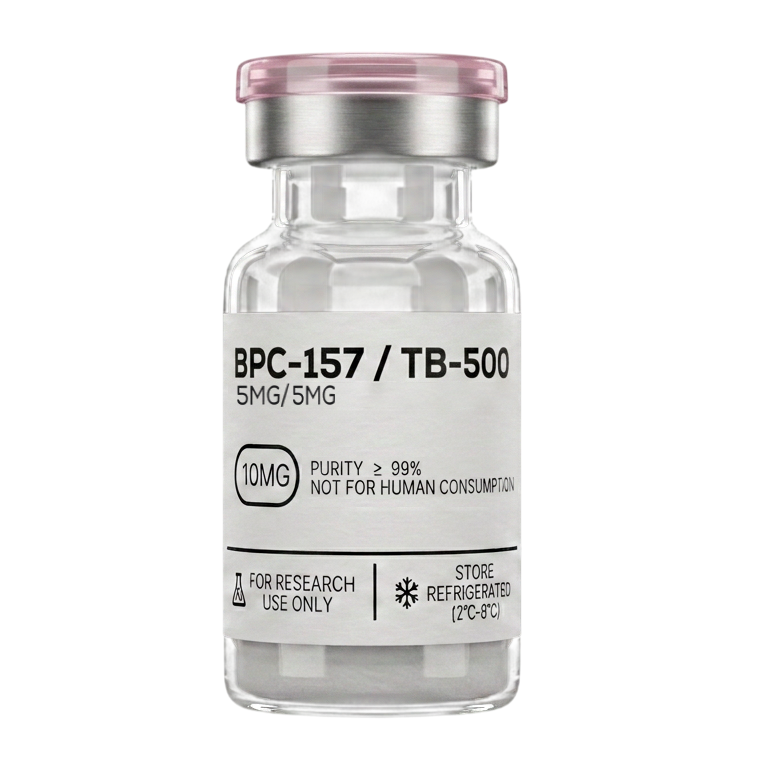
A BPC-157 / TB-500 blend combines both peptides in one vial, usually with a stated total amount (for example 10 mg). Good documentation for a blend should:
- Confirm the identity of each component separately by mass spectrometry
- Show separate chromatographic peaks for each peptide, or explain how purity was assessed
- State the intended ratio of the two components, and ideally how it was verified
- Use a lot number that matches the vial label
A single purity figure for the whole vial says little about whether both peptides are present in the expected proportions. See HPLC Purity vs. Mass Spec Identity for why.

Anti-doping status
The World Anti-Doping Agency’s 2026 Prohibited List names BPC-157 under S0 (non-approved substances), and thymosin beta-4 and its derivatives, including TB-500, under S2 (peptide hormones, growth factors and related substances). Both are prohibited at all times in sport.
Canadian regulatory context
On April 9, 2026, Health Canada issued a public advisory about unauthorized injectable peptides sold online. BPC-157 and TB-500 were both among the compounds it named. The advisory states that labels such as “For Research Use Only – Not for Human Consumption” do not make a product legal for personal use or exempt it from drug regulations. Health Canada also reported seizures of unauthorized peptide products and said it is working with the Canada Border Services Agency on imports.
Frequently asked questions
Is BPC-157 approved in Canada?
No. BPC-157 is not an approved drug in Canada or any other country, and it was named in Health Canada’s April 2026 advisory on unauthorized peptides.
Is TB-500 the same as thymosin beta-4?
Not always. The name is used both for a short synthetic fragment of thymosin beta-4 and for the full 43-residue protein. Check the molecular weight on the CoA.
Why are BPC-157 and TB-500 sold as a blend?
They are often studied in related research areas, so some suppliers combine them in one vial. A blend needs documentation that confirms both components.