




Retatrutide has drawn more attention than almost any other investigational peptide, largely because of its clinical trial results. That attention makes it especially important to separate the drug candidate being studied in trials from material sold for laboratory research.
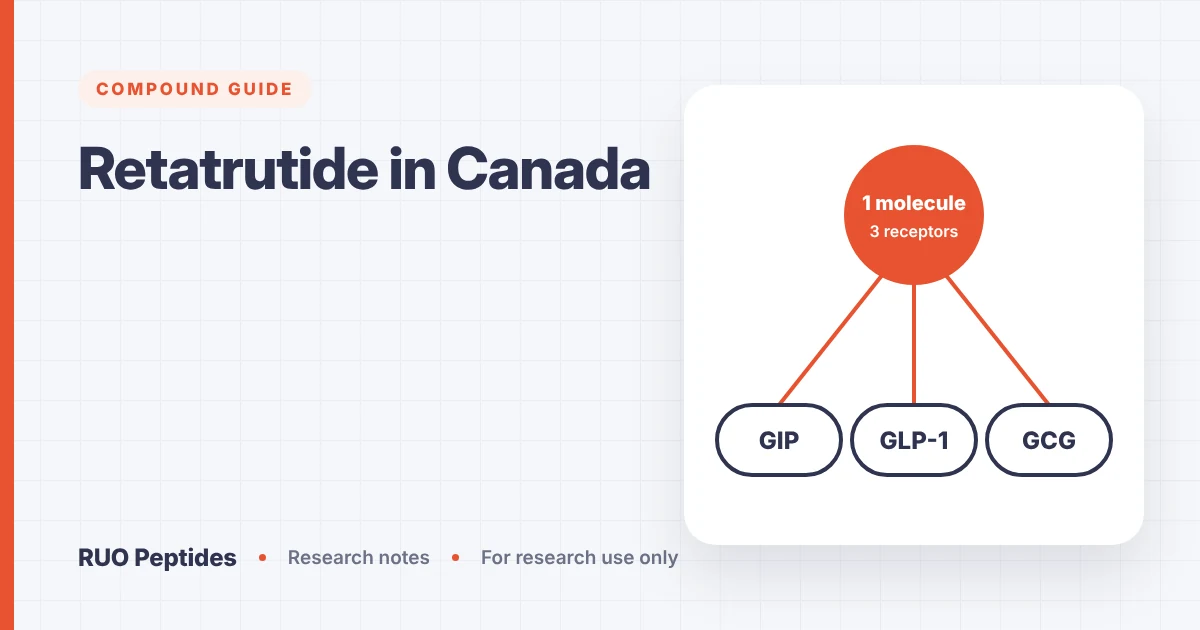
- Retatrutide (LY3437943) targets three receptors: GIP, GLP-1 and glucagon.
- Eli Lilly reported Phase 3 TRIUMPH results in May and July 2026.
- It is not approved anywhere. Lilly plans an FDA submission in early 2027.
- Research-use retatrutide is not the trial drug. Check identity carefully against related compounds.
Retatrutide at a glance
| Development code | LY3437943 |
| Developer | Eli Lilly |
| Receptor targets | GIP, GLP-1 and glucagon receptors |
| Clinical stage | Phase 3 (TRIUMPH program) |
| Approval status | Not approved anywhere as of 2026 |
| Regulatory plan | FDA submission planned for Q1 2027 |
What makes it a “triple agonist”
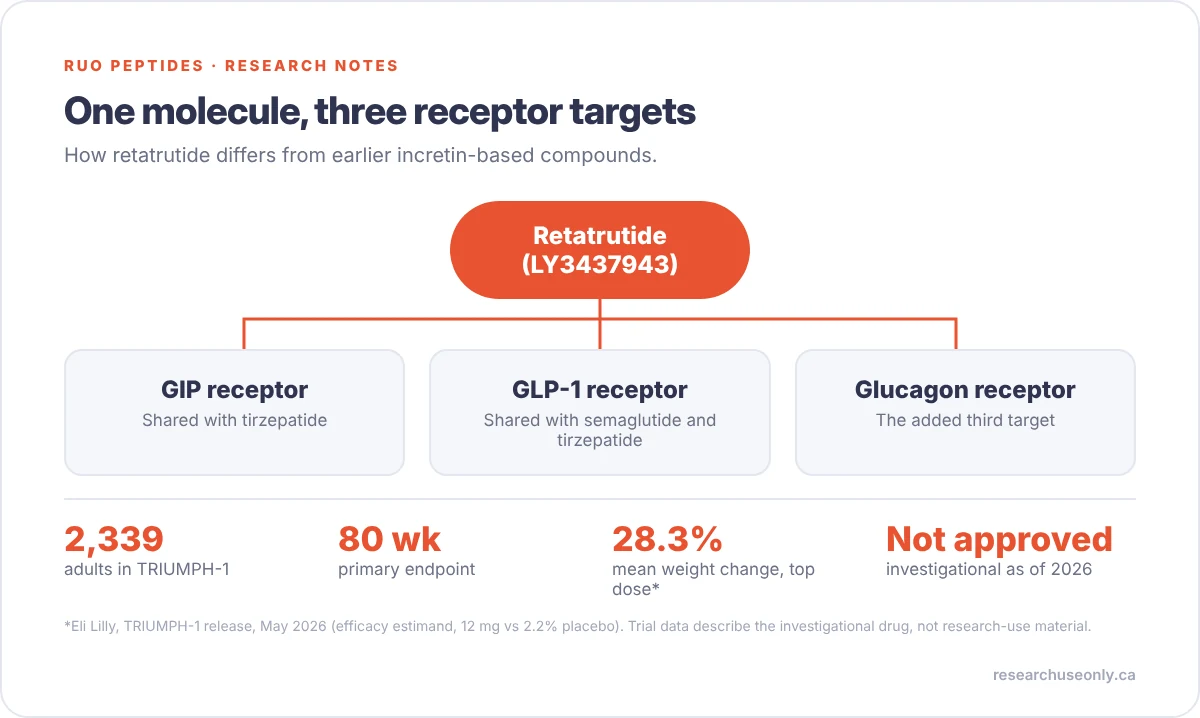
Retatrutide is a single peptide designed to activate the glucose-dependent insulinotropic polypeptide (GIP) receptor, the glucagon-like peptide-1 (GLP-1) receptor and the glucagon receptor. Approved drugs in the same family act on one or two of these receptors.
Clinical trial status
Eli Lilly reported results from its Phase 3 TRIUMPH program in 2026:
- TRIUMPH-1 (May 2026) studied 2,339 adults with obesity or overweight without diabetes over 80 weeks. Average weight reduction was 28.3% at the highest dose, compared with 2.2% for placebo.
- TRIUMPH-2 and TRIUMPH-3 (July 2026) studied adults with type 2 diabetes, and adults with severe obesity and established cardiovascular disease.
Gastrointestinal side effects such as nausea were common, and discontinuation rates rose at higher doses. Lilly states retatrutide is legally available only to clinical trial participants.
What a CoA should confirm
Retatrutide is a long, modified peptide, which makes synthesis and analysis more demanding. Look for:
- Mass spectrometry identity matching retatrutide’s expected mass, which distinguishes it from related compounds such as semaglutide or tirzepatide
- HPLC purity with a well-resolved main peak
- A lot number matching the vial, and a stated amount consistent with the label
Canadian regulatory context
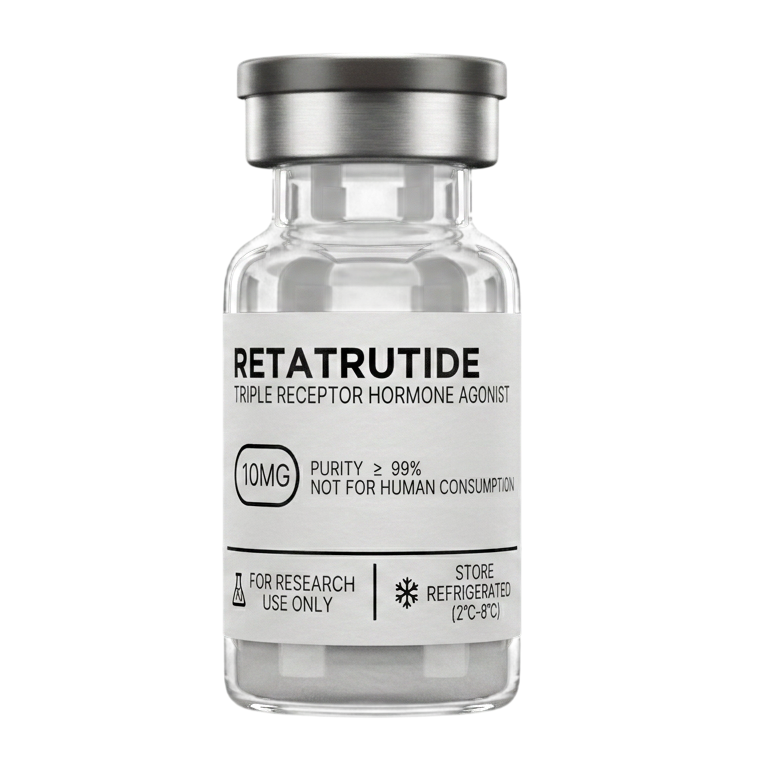
On April 9, 2026, Health Canada issued a public advisory about unauthorized injectable peptides sold online. Retatrutide was among the compounds it named. The advisory states that labels such as “For Research Use Only – Not for Human Consumption” do not make a product legal for personal use or exempt it from drug regulations. Health Canada also reported seizures of unauthorized peptide products and said it is working with the Canada Border Services Agency on imports.
Frequently asked questions
Is retatrutide approved in Canada?
No. Retatrutide is investigational and not approved in any country. It was named in Health Canada’s April 2026 advisory on unauthorized peptides.
How is retatrutide different from semaglutide or tirzepatide?
Semaglutide targets the GLP-1 receptor, and tirzepatide targets GIP and GLP-1 receptors. Retatrutide adds the glucagon receptor as a third target.
When could retatrutide be approved?
Eli Lilly has said it plans to submit an application to the US FDA in the first quarter of 2027. Approval timelines in other countries, including Canada, have not been announced.
Sources
- Eli Lilly, TRIUMPH-1 results, May 21, 2026
- Eli Lilly, TRIUMPH-2 and TRIUMPH-3 results, July 23, 2026