
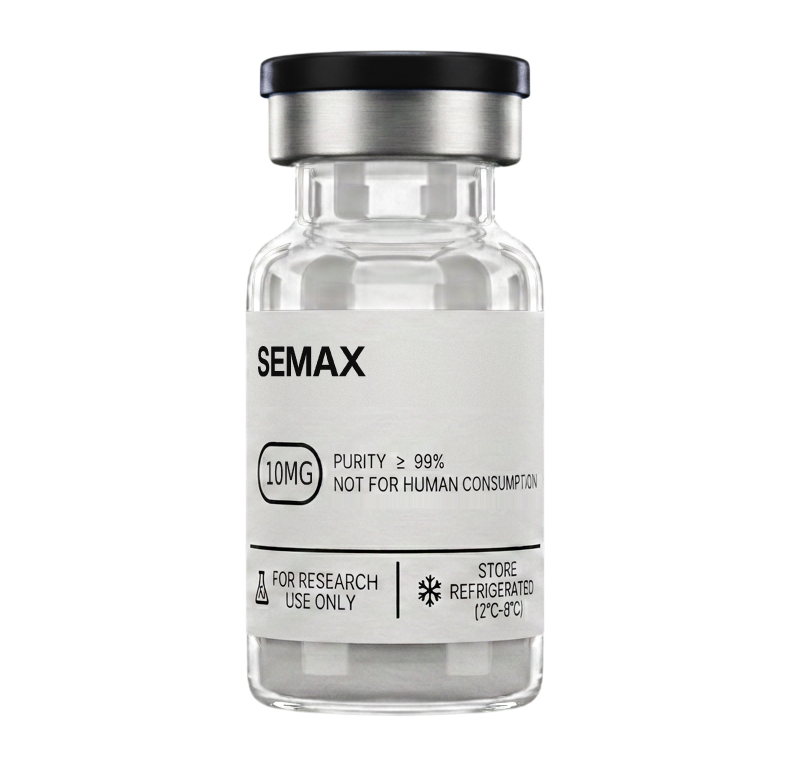
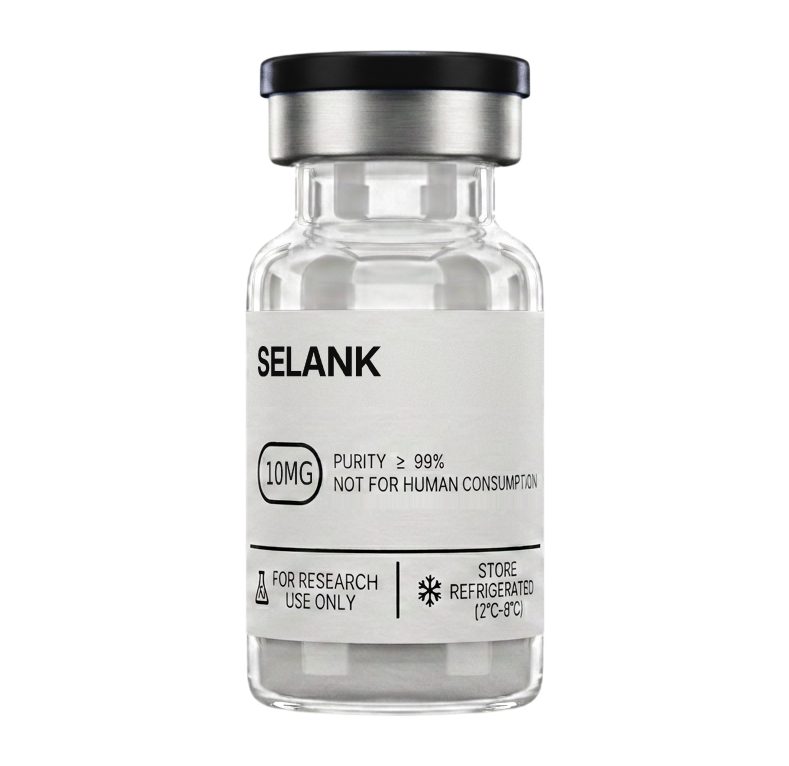
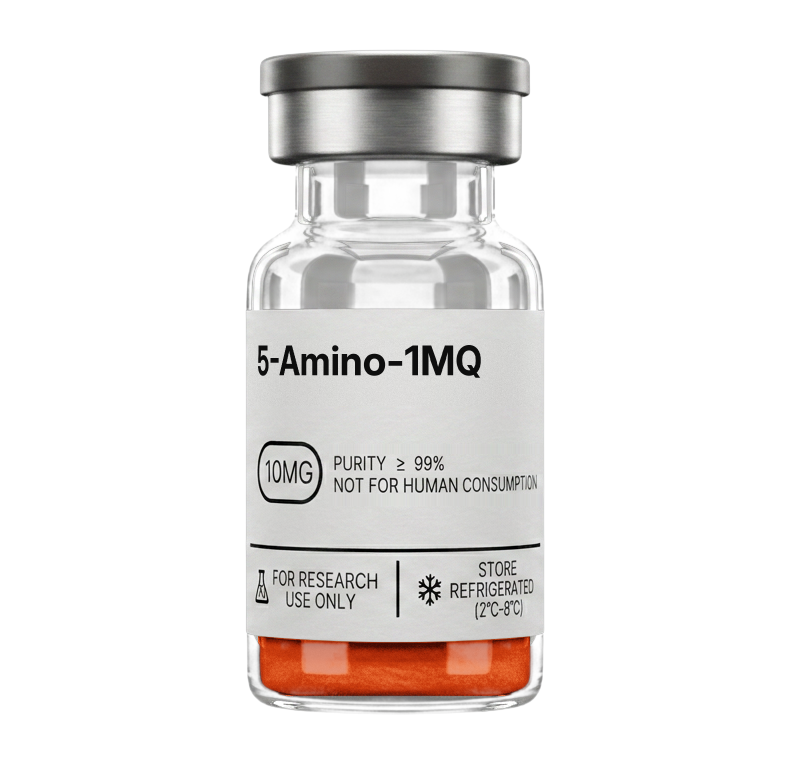
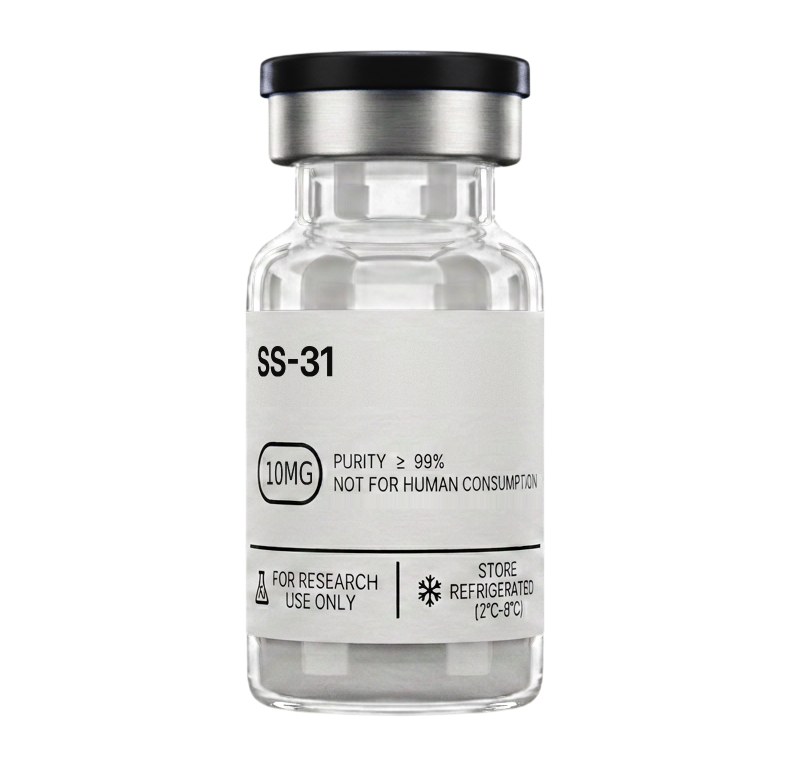
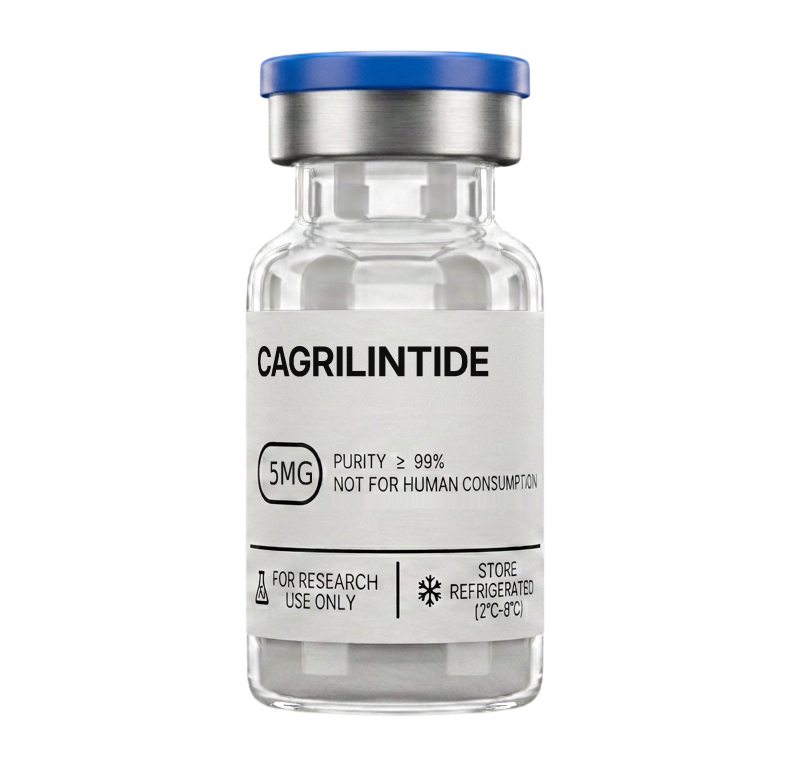
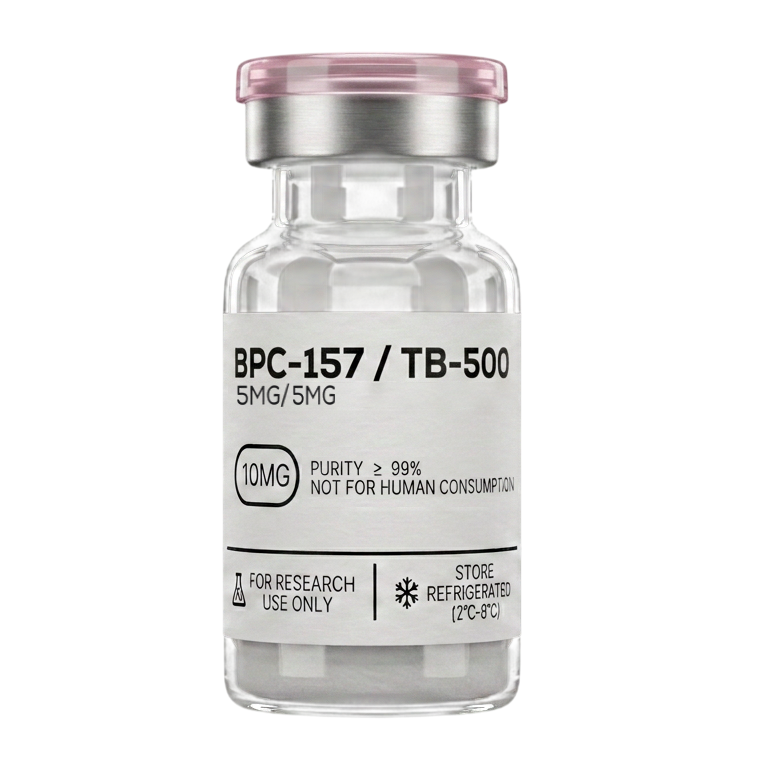


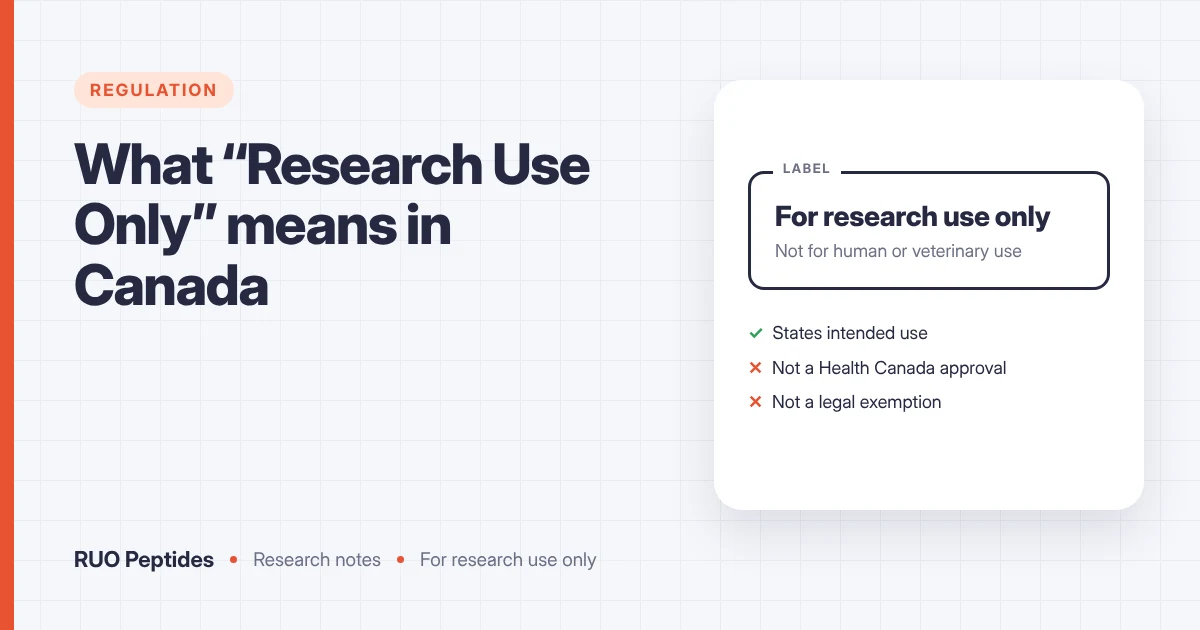
“For Research Use Only” appears on reagents, antibodies, analytical standards and research peptides. It is a statement about how a product is intended to be used. In Canada it is not an approval, and in 2026 Health Canada made clear that it is not a legal shield either. This guide explains what the label does and does not mean for a lab.
- A research-use-only (RUO) label says the material is intended for laboratory research, not for human or veterinary use.
- It is not an authorization from Health Canada and does not mean a product has been assessed for safety or quality.
- Under the Food and Drugs Act, how a product is sold or represented matters, not only the disclaimer on the label.
- Health Canada stated in April 2026 that RUO wording does not exempt a product from drug rules, and obtained an injunction against an online peptide seller in July 2026.
What the label is for
Research-use labels are common across the life-science supply chain. A supplier uses them to say that a product is made and documented for experiments, such as cell culture work, binding assays, analytical method development or reference standards, and not for diagnosis or treatment.
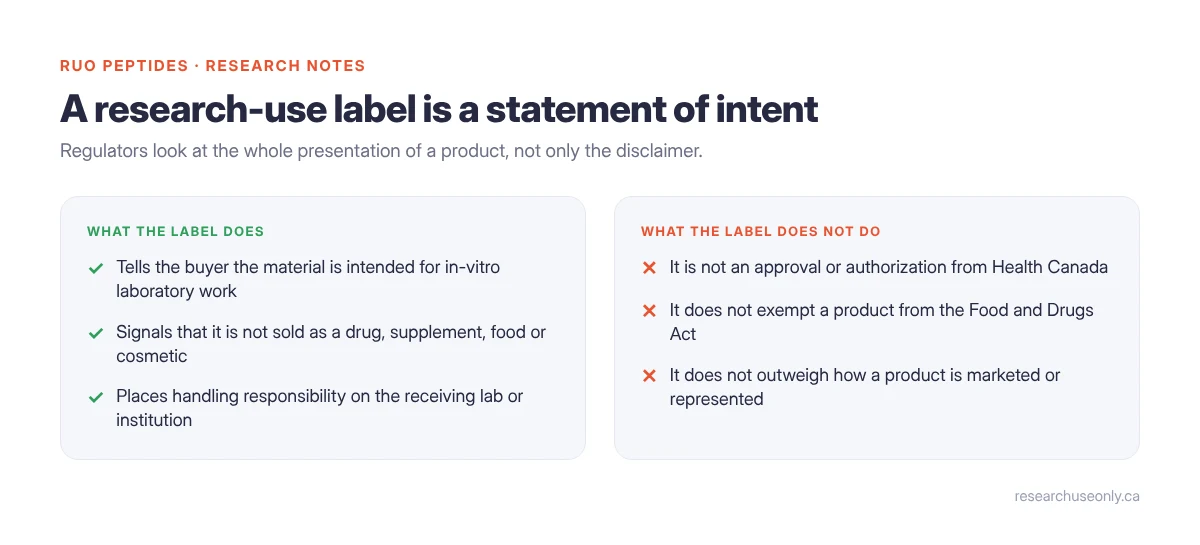
In practice, the label tells the buyer three things:
- the material is intended for in-vitro or laboratory work;
- it is not sold as a drug, supplement, food or cosmetic; and
- responsibility for appropriate handling and use sits with the receiving lab or institution.
The quality documentation behind a research product is usually a Certificate of Analysis covering identity and purity. See How to Read a Peptide Certificate of Analysis for what that typically includes.
What the label does not do
An RUO label is easy to over-read. It does not:
- Grant approval. Health Canada has not reviewed or authorized research-grade peptides as drugs. The label says nothing about safety or efficacy.
- Create a legal exemption. No section of the Food and Drugs Act turns a product into a non-drug because of a disclaimer.
- Override marketing. If the way a product is presented implies human use, the label does not change how it is classified.
- Replace documentation. It is a statement of intent, not evidence of identity or purity. That comes from the CoA.
How Canadian law looks at it
The Food and Drugs Act defines a drug by what a substance is manufactured, sold or represented for, including the diagnosis, treatment, mitigation or prevention of disease. Law firm commentary from Fasken notes that this definition looks at how a product is sold or represented, not only at what it is.
Gowling WLG makes a similar point: classification depends on intended use, route of administration and claims. Most research peptides are not controlled substances, but that does not make them legal to sell for human use. Peptides intended for injection in people are treated by Health Canada as prescription drugs and cannot be natural health products or cosmetics.
| Framework | Relevance to research peptides |
| Food and Drugs Act | Defines “drug” by how a product is manufactured, sold or represented |
| Food and Drug Regulations | Licensing for manufacturing, importing, testing and distribution of drugs |
| Natural health products | Not available as a route for injectable peptides |
| Controlled Drugs and Substances Act | Does not list most research peptides |
What changed in 2026
In an April 2026 advisory on unauthorized injectable peptides sold online, Health Canada stated that labels such as “For Research Use Only – Not for Human Consumption” do not make a product legal for personal use or exempt it from drug regulations.
On July 29, 2026, Health Canada announced a permanent injunction against a Québec-based online seller, following a June 2026 decision of the Superior Court of Québec. According to Fasken, the order prohibits the company from manufacturing, testing, distributing, selling and advertising unauthorized injectable peptides, including through websites and social media accessible from Canada.
Fasken also notes that peptides can still be supplied for legitimate scientific research, for example to universities, laboratories and biotechnology companies. The commentary lists factors a regulator may weigh beyond the disclaimer: product format, website content, customer base, order patterns, any ancillary supplies, and the controls a seller uses to prevent personal use.
What this means for a lab
For research groups buying peptides in Canada, the practical points are straightforward:
- Buy for a defined research purpose and keep purchasing records with the project they support.
- Ask for lot-specific documentation: mass spectrometry identity, HPLC purity and, where relevant, salt form and peptide content.
- Treat supplier claims critically. A research supplier should describe chemistry and documentation, not health benefits.
- Follow your institution’s policies on chemical procurement, storage and disposal.
Frequently asked questions
Does “research use only” mean a product is approved?
No. It describes intended use. Research-grade peptides have not been authorized by Health Canada as drugs.
Does an RUO label exempt a product from the Food and Drugs Act?
No. Health Canada stated in April 2026 that such labels do not make a product legal for personal use or exempt it from drug regulations. How a product is represented is part of the assessment.
Can labs in Canada still buy research peptides?
Yes. Commentary from Canadian law firms notes that peptides can be supplied for legitimate scientific research, such as to academic, institutional and biotechnology labs.
Are research peptides controlled substances in Canada?
Most are not listed under the Controlled Drugs and Substances Act. That is separate from whether they can be sold as drugs, which falls under the Food and Drugs Act.
Sources
- Health Canada, advisory on unauthorized injectable peptides (April 2026)
- Fasken, Health Canada takes action against unauthorized peptide sales (August 2026)
- Gowling WLG, Peptides in Canada: regulatory reality is catching up with the hype (September 2026)
- Food and Drugs Act (R.S.C. 1985, c. F-27)
Related reading
Browse the catalogue: see the current research peptides available in Canada, each listed with amount, purity and storage details. For research use only.