

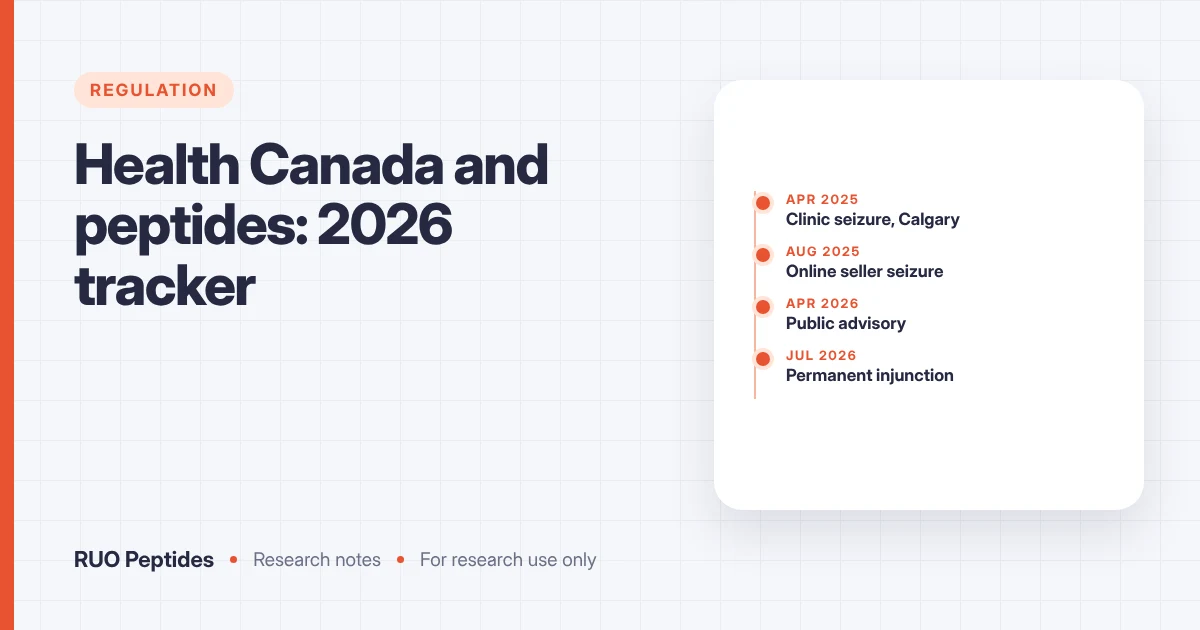
Health Canada has stepped up action on unauthorized peptides since 2023, from product seizures to a public advisory and, in 2026, a permanent court injunction. This tracker lists the main public actions in date order, explains the rules they rely on, and notes related developments outside Canada. It will be updated as new actions are published. Last reviewed October 2026.
- Health Canada treats peptides sold for therapeutic use as drugs under the Food and Drugs Act. Most require a prescription.
- Public actions since 2023 include seizures from clinics and online sellers, an April 2026 advisory and a July 2026 permanent injunction.
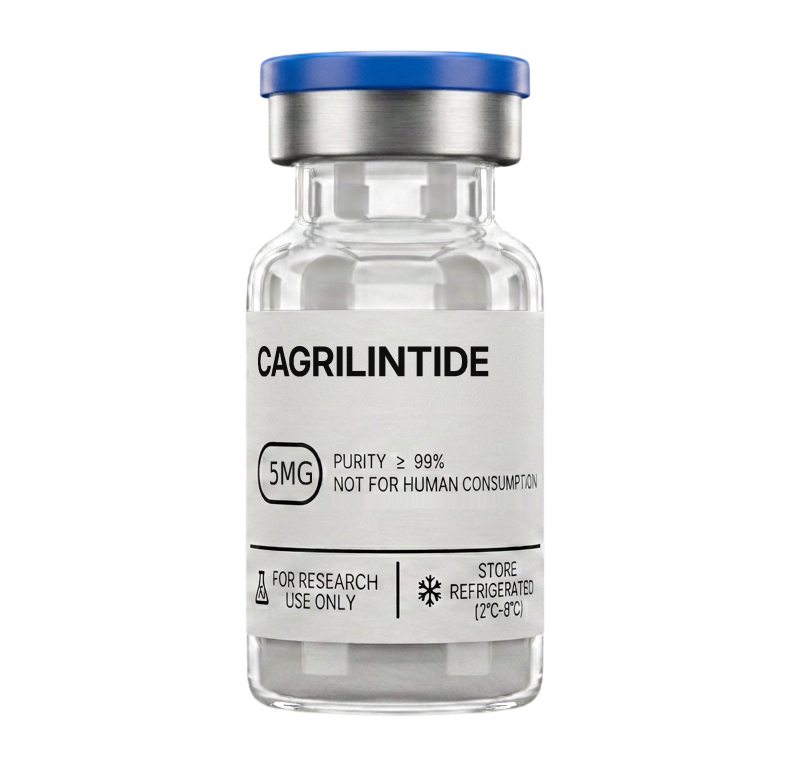
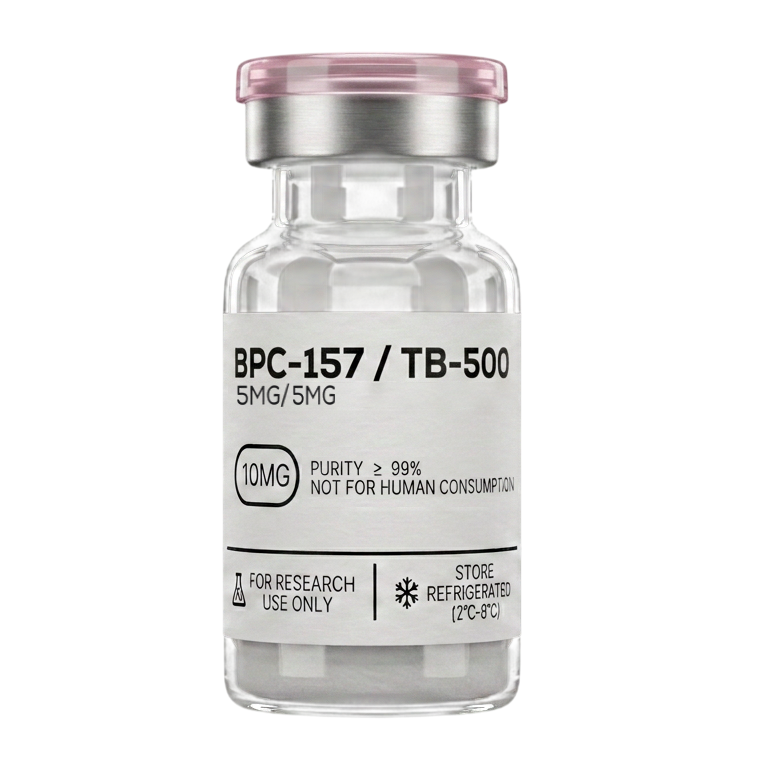
- Health Canada has said that “For Research Use Only” labels do not make unauthorized products legal.
- US FDA advisory votes in July 2026 have no effect in Canada.
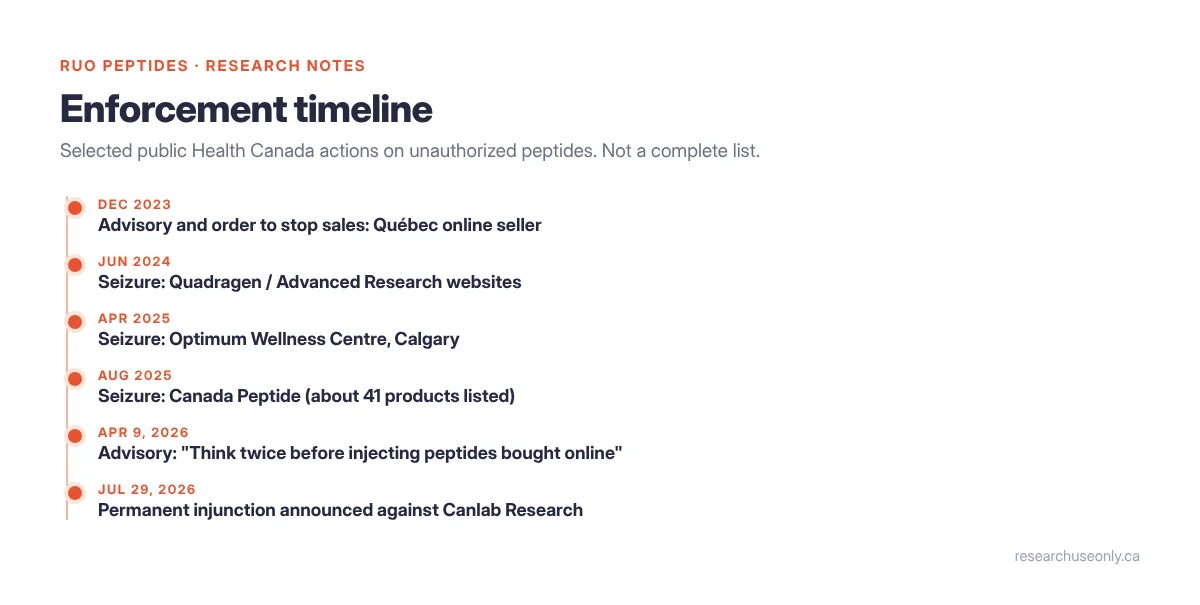
Timeline of public actions
| Date | Action |
| Dec 2023 | Advisory naming an online seller (Canlab Research) and an order to stop advertising and selling unauthorized injectable products. |
| Jun 2024 | Seizure of injectable peptides from the Quadragen and Advanced Research websites (Beloeil, Québec). The sites were taken down. |
| Apr 2025 | Seizure of about 26 unauthorized injectable peptide products from a wellness clinic in Calgary. |
| Apr 2025 | Seizure from an online seller in Sherbrooke, Québec, which stopped selling at Health Canada’s request. |
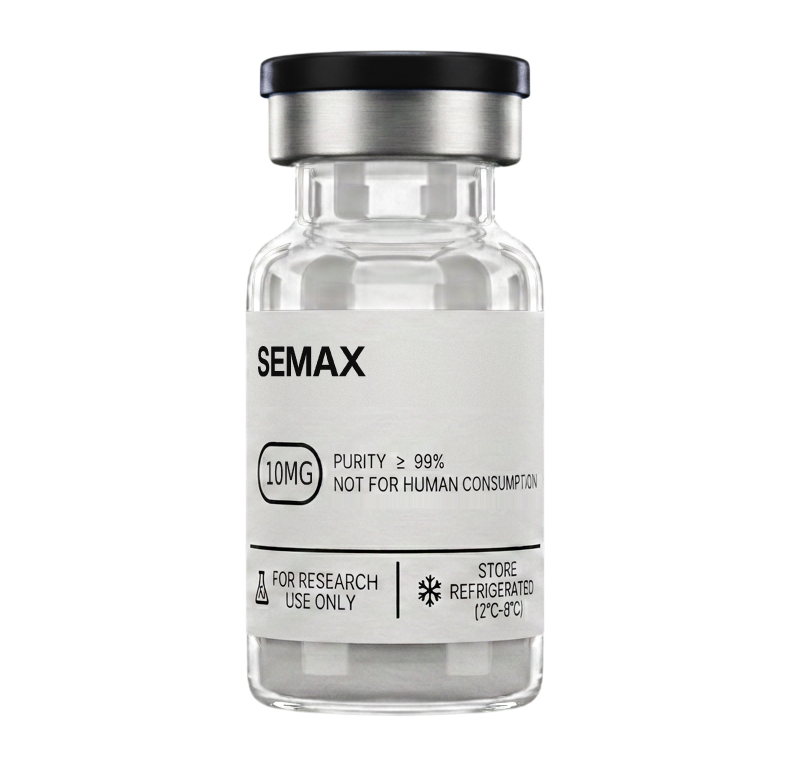
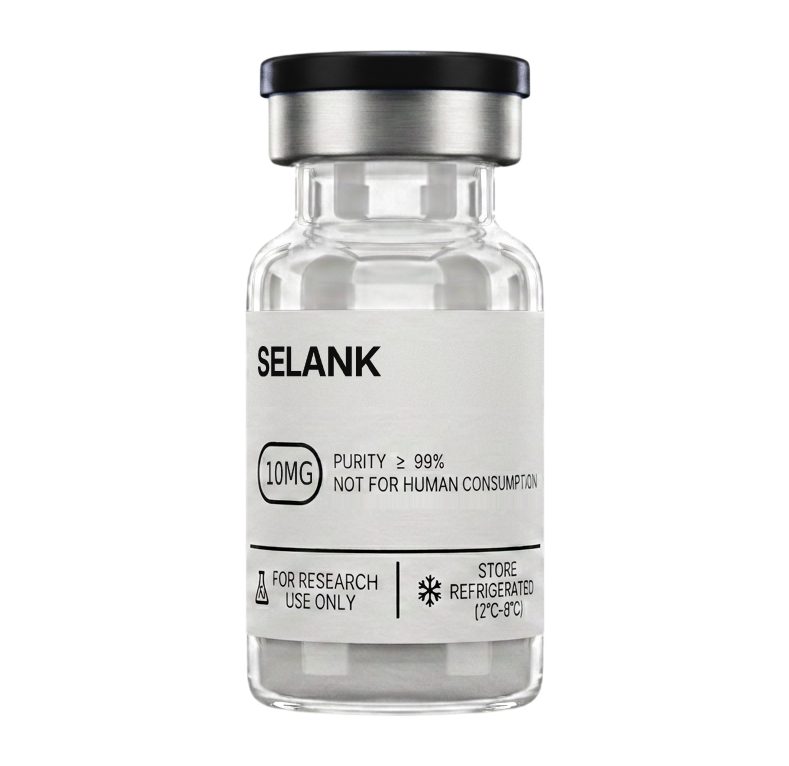
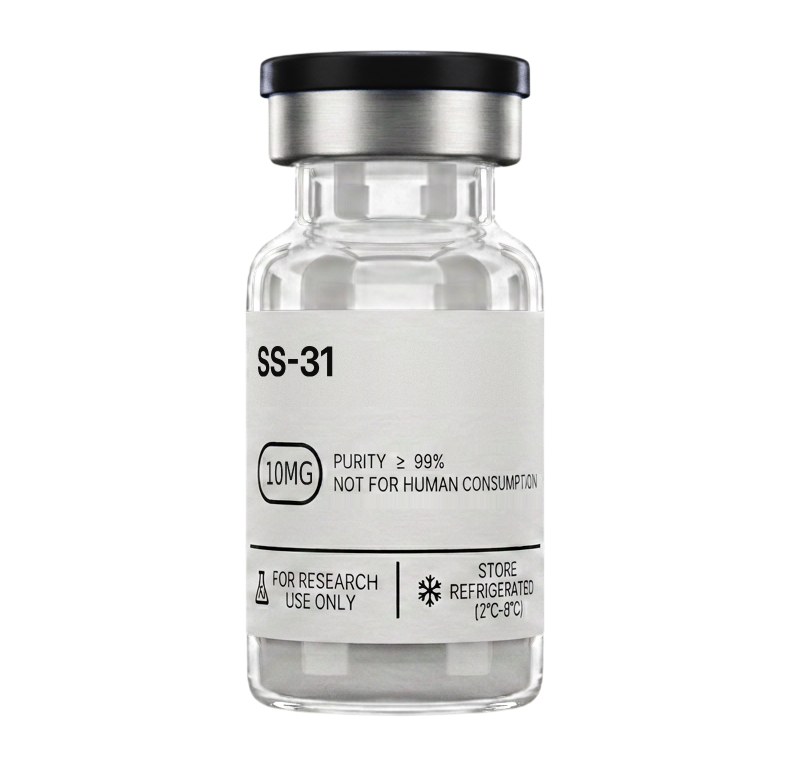
| Aug 2025 | Seizure from an online seller (Canada Peptide), with a published list of about 41 products, including BPC-157, Semax, Selank, SS-31, retatrutide and tirzepatide. |
| Jan 2026 | Advisory on fake and unauthorized GLP-1 products such as Ozempic and Mounjaro look-alikes. |
| Apr 9, 2026 | Public advisory, “Think twice before injecting peptides bought online”, naming examples of seized products and addressing research-use-only labels. |
| Jul 29, 2026 | Health Canada announced a permanent injunction from the Superior Court of Québec against Canlab Research, covering websites and social media accessible from Canada. |
What the April 2026 advisory says
The advisory states that peptides are generally regulated as prescription drugs in Canada, that unauthorized products have not been assessed for safety, efficacy or quality, and that Canadians should not buy or use them. It lists examples of seized products, including BPC-157, TB-500, CJC-1295, GHK-Cu, MOTS-c, SS-31 and retatrutide.
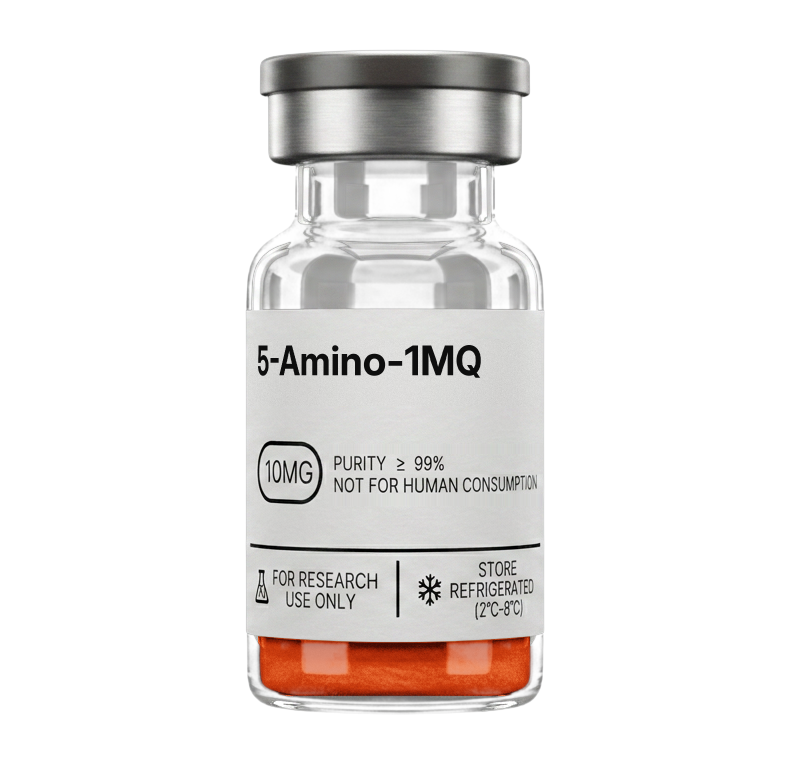
On labelling, Health Canada reported finding products marked “For Research Use Only – Not for Human Consumption” and stated that this wording does not make a product legal or exempt it from the rules. It also advised checking for an eight-digit Drug Identification Number (DIN) in the Drug Product Database.
The rules behind the actions
- Food and Drugs Act, section 2: a “drug” includes any substance manufactured, sold or represented for use in diagnosing, treating, mitigating or preventing disease, or modifying organic functions. How a product is represented matters.
- Food and Drug Regulations: drugs generally need a DIN before sale, and fabricating, importing, testing or distributing them requires a Drug Establishment Licence.
- Section 21.5 injunctions: courts can order a person to stop activities that may constitute an offence under the Act. This is the tool used in the Canlab case.
- Personal importation: Health Canada’s guidance states that residents generally may not bring prescription drugs into Canada, including by mail or courier, with narrow exceptions.
International context
United States: on July 23–24, 2026, the FDA Pharmacy Compounding Advisory Committee voted to recommend six peptides, including BPC-157, TB-500, MOTS-c and Semax, for the list of substances pharmacies may compound. FDA staff had recommended against all of them. The votes are advisory, FDA had not acted on them as of October 2026, and they do not change anything in Canada.
Sport: the WADA Prohibited List names BPC-157 under non-approved substances and thymosin beta-4 derivatives such as TB-500 under growth factors.
What this means for research buyers
Law firm commentary from Fasken notes that peptides can still be supplied for legitimate research to institutions, laboratories and biotechnology companies, and that regulators look at the whole business rather than a disclaimer alone. For labs, that means buying for a defined research purpose, keeping documentation, and choosing suppliers who describe chemistry rather than health benefits. See What “Research Use Only” Means in Canada and Choosing a Research Peptide Supplier in Canada.
Frequently asked questions
Are peptides legal in Canada?
Peptides with therapeutic use are generally regulated as prescription drugs. Unauthorized products cannot be legally sold for human use. Supply for legitimate laboratory research is treated differently, but a research label alone does not decide the question.
Does a research-use-only label exempt a product?
No. Health Canada stated in April 2026 that such labels do not make an unauthorized product legal or exempt it from the rules.
Does the July 2026 FDA vote change anything in Canada?
No. It was an advisory vote in the United States and has no legal effect in Canada.
How often is this tracker updated?
It is reviewed when Health Canada publishes new advisories or enforcement actions related to peptides. The last review date is shown at the top of the page.
Sources
- Health Canada, Think twice before injecting peptides bought online (April 9, 2026)
- Health Canada, permanent injunction against Canlab Research (July 29, 2026)
- Health Canada recalls and safety alerts: Calgary seizure (2025), Canada Peptide seizure (2025), GLP-1 advisory (2026)
- Food and Drugs Act; Health Canada personal importation guidance (GUI-0116)
- Fasken, Health Canada takes action against unauthorized peptide sales (August 2026); Mintz, FDA advisory committee votes on peptides (July 2026)
Related reading
Browse the catalogue: see the current research peptides available in Canada, each listed with amount, purity and storage details. For research use only.