
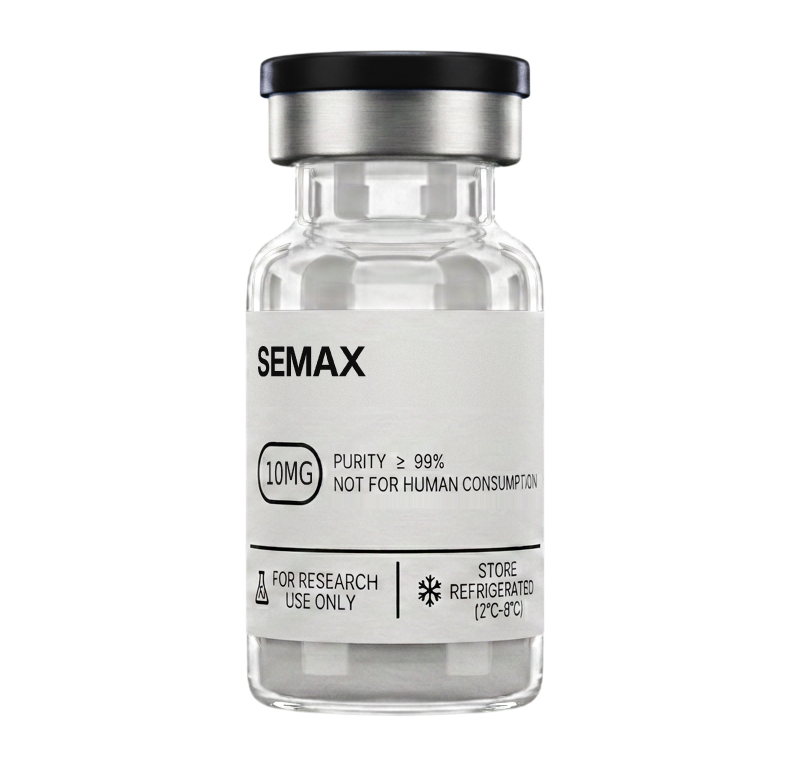
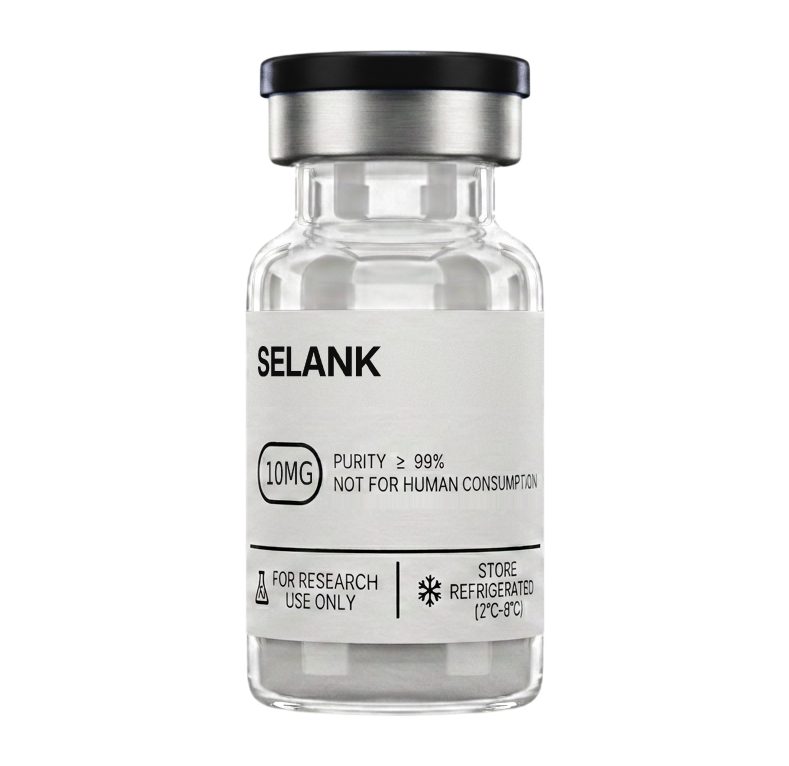
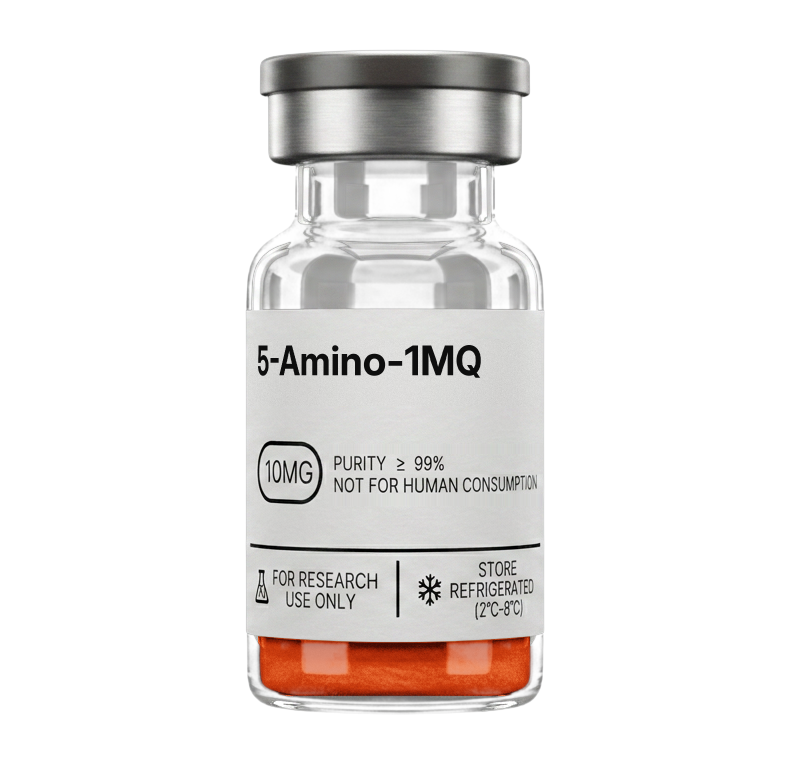
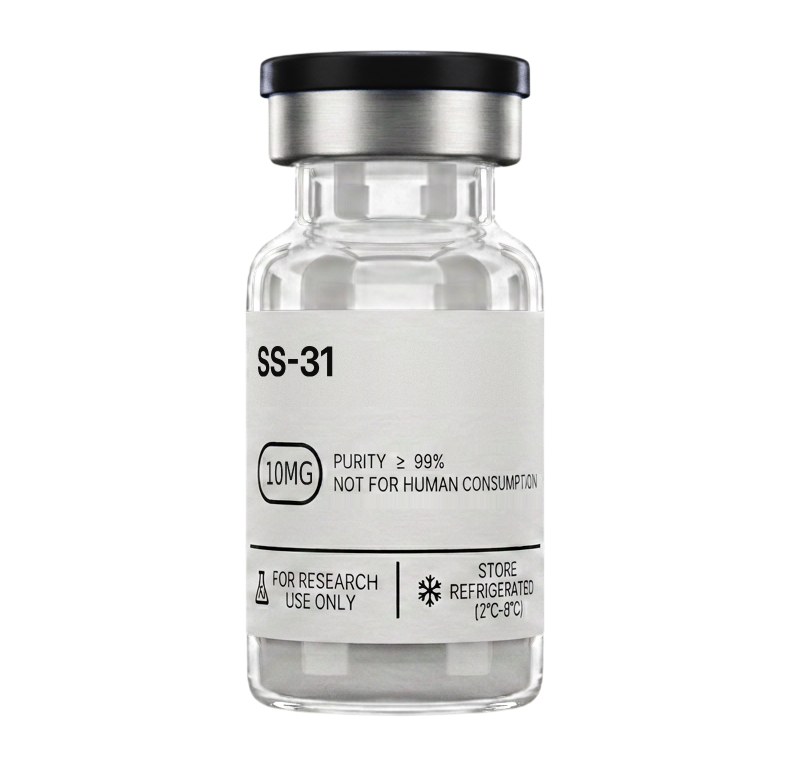


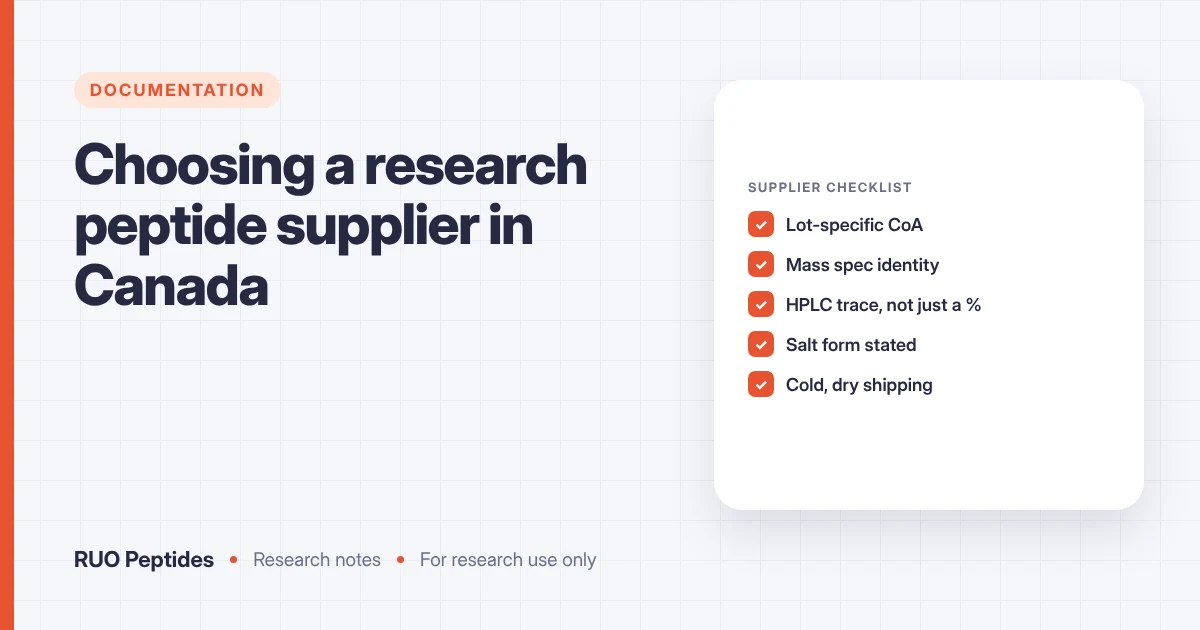
Research peptides are sold by many small online suppliers, and quality varies widely. The vial itself tells you little: a white powder looks the same whether it is 99% pure or the wrong molecule. What separates suppliers is documentation, handling and how they describe their products. This checklist is written for Canadian labs comparing suppliers.
- Ask for a lot-specific CoA with mass spectrometry identity and an HPLC chromatogram, not just a purity percentage.
- Check that the lot number on the CoA matches the vial and that the salt form is stated.
- Look for clear storage and shipping practices for lyophilized material.
- Rule out suppliers who make health claims or treatment promises. A research supplier should describe chemistry and documentation.
1. Documentation
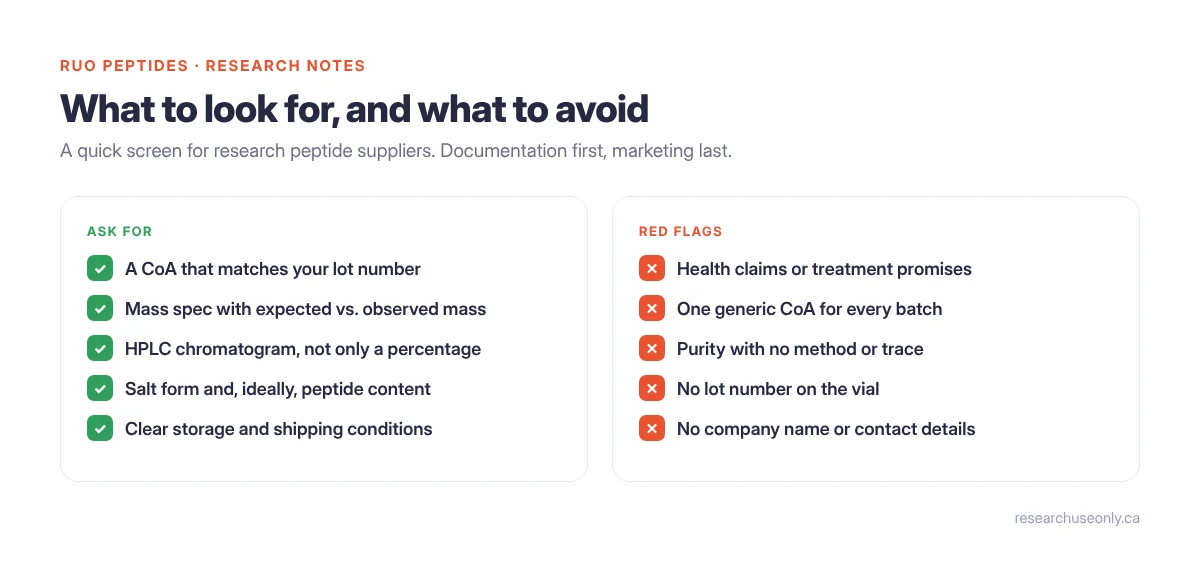
The Certificate of Analysis is the most important document a supplier can give you. A useful CoA is specific to the lot you receive and shows the underlying data, not just a summary number.
- Lot number that matches the label on your vial.
- Mass spectrometry with the expected and observed mass, ideally with the spectrum.
- HPLC purity with the chromatogram, method and detection wavelength.
- Salt form (TFA, acetate or other) and, where available, net peptide content.
- Test date and laboratory, so you know whether the data is current and who produced it.
Our guides on reading a CoA, HPLC vs. mass spec and peptide content vs. purity explain each field.
2. Checking the data
A CoA is only useful if it fits the molecule. A few quick checks catch most problems:
- Compare the reported mass with the published molecular weight of the peptide. A mismatch of more than about 1 Da needs an explanation.
- Look at the chromatogram for a single dominant peak. Shoulders or several large peaks suggest impurities or degradation.
- Watch for the same CoA reused across many lots, or CoAs with no dates.
- For blends, check that identity and purity are shown for each component.
- For sensitive cell work, ask whether endotoxin data is available. See Endotoxin and Sterility Testing.
3. Handling and shipping
Lyophilized peptides are fairly stable, but heat, moisture and light still degrade them. A good supplier stores stock cold and dry, ships in sealed vials, and states storage conditions clearly. Shipping within Canada from a domestic supplier also avoids customs delays and the temperature swings of long international transit. See Lyophilized Peptide Storage and Handling and How Peptides Degrade.
4. Red flags
- Health claims or treatment promises, such as references to weight loss, healing or performance in people. These conflict with research-use positioning and draw regulatory attention.
- One generic CoA for every batch, or no CoA at all.
- Purity without a method, such as “99% pure” with no chromatogram or test details.
- No lot number on the vial or no way to match it to documentation.
- No company name, address or contact details.
5. Questions to ask before ordering
- Can you send the CoA for the specific lot I will receive?
- Which laboratory performed the mass spectrometry and HPLC, and when?
- What salt form is the peptide supplied as?
- How is the product stored before shipping, and how is it packed?
- Is endotoxin data available for this lot?
Frequently asked questions
What is the single most important thing to check?
A lot-specific Certificate of Analysis with mass spectrometry identity and an HPLC chromatogram. Without it, there is no way to confirm what is in the vial.
Is a purity percentage enough?
No. A percentage without a chromatogram and method cannot be checked, and purity says nothing about whether the peptide is the right molecule.
Why does a domestic supplier matter?
Shipping within Canada is faster and avoids customs delays and long periods at uncontrolled temperatures, which helps protect lyophilized material.
Why are health claims a red flag?
Research suppliers sell materials for laboratory use. Claims about effects in people conflict with that purpose and are a focus of Health Canada enforcement.
Sources
- Health Canada, advisory on unauthorized injectable peptides (April 2026)
- Peptide quality control: net peptide content and HPLC purity, Bachem
- Fasken, Health Canada takes action against unauthorized peptide sales (August 2026)
Related reading
Browse the catalogue: see the current research peptides available in Canada, each listed with amount, purity and storage details. For research use only.