
RUO Peptides · Research notes
Lab Guides
Testing, documentation and handling

Research Peptides in Canada: How to Read Product Listings
Comparing research peptides in Canada starts with understanding what each product listing actually tells you. A compound name, an amount in milligrams and a product image […]
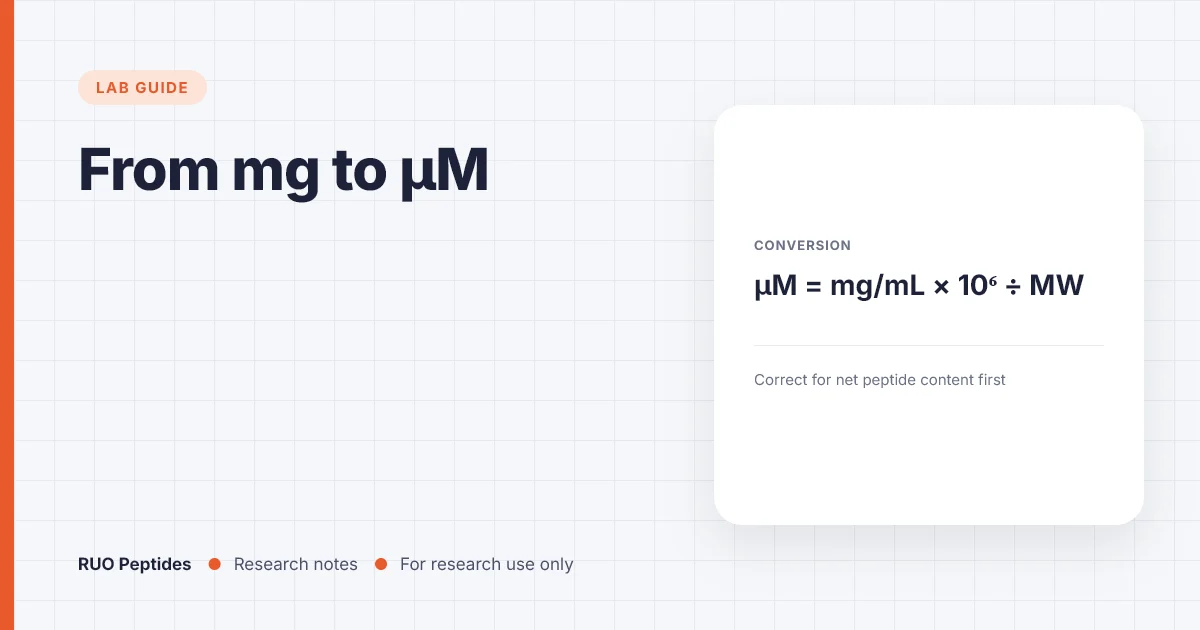
What Is Peptide Molarity?
How to convert a peptide's mass to molar concentration for in-vitro assays, correct for net peptide content, prepare a stock solution and plan serial dilutions, with worked examples.
What Are Peptide Salt Forms?
Why most synthetic peptides arrive as TFA salts, how much of the vial weight the counterion accounts for, how TFA can affect cell assays, and when acetate or HCl salts make more sense.
Research Peptide Glossary
Plain-language definitions of the terms on research peptide listings and CoAs: HPLC, mass spec, net peptide content, TFA salt, endotoxin, lyophilized and more.
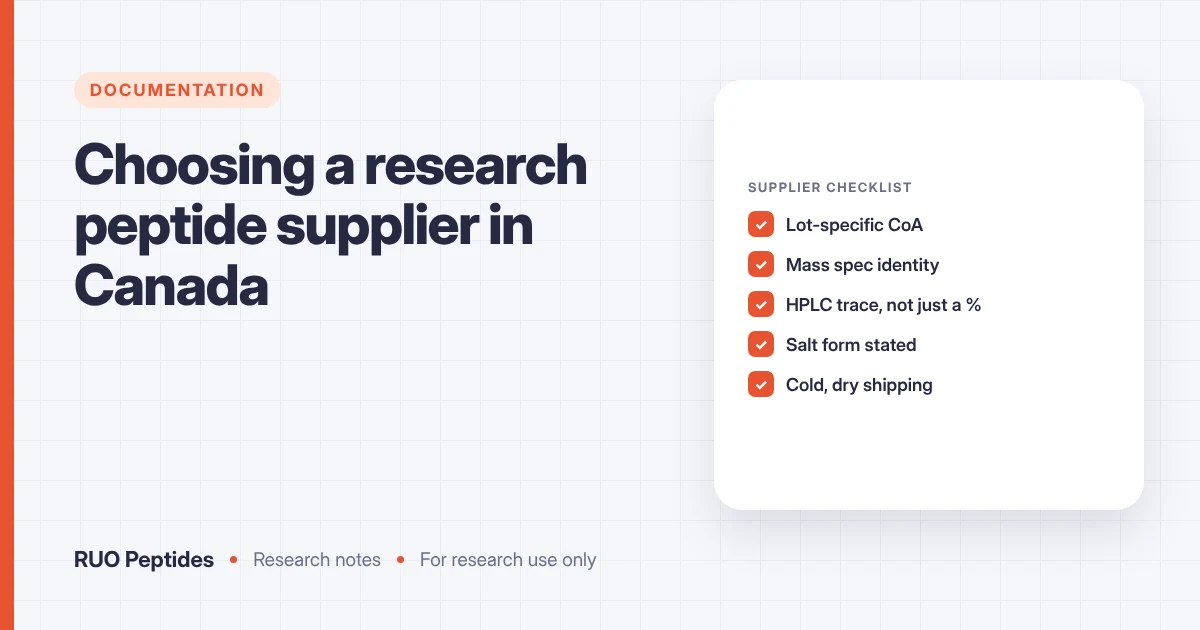
How to Choose a Peptide Supplier
A practical checklist for Canadian labs: what documentation to ask a peptide supplier for, how to check it, and the red flags that should rule a supplier out.
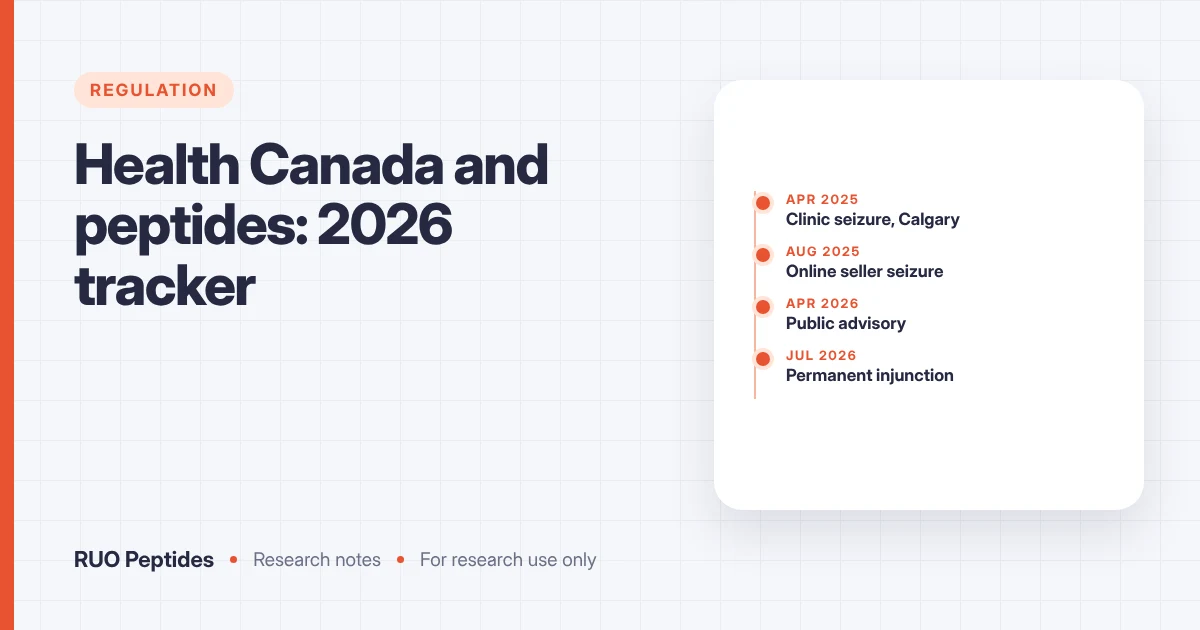
Health Canada Peptide Rules
A dated timeline of Health Canada advisories, seizures and court action on unauthorized peptides from 2023 to 2026, with the rules behind them.
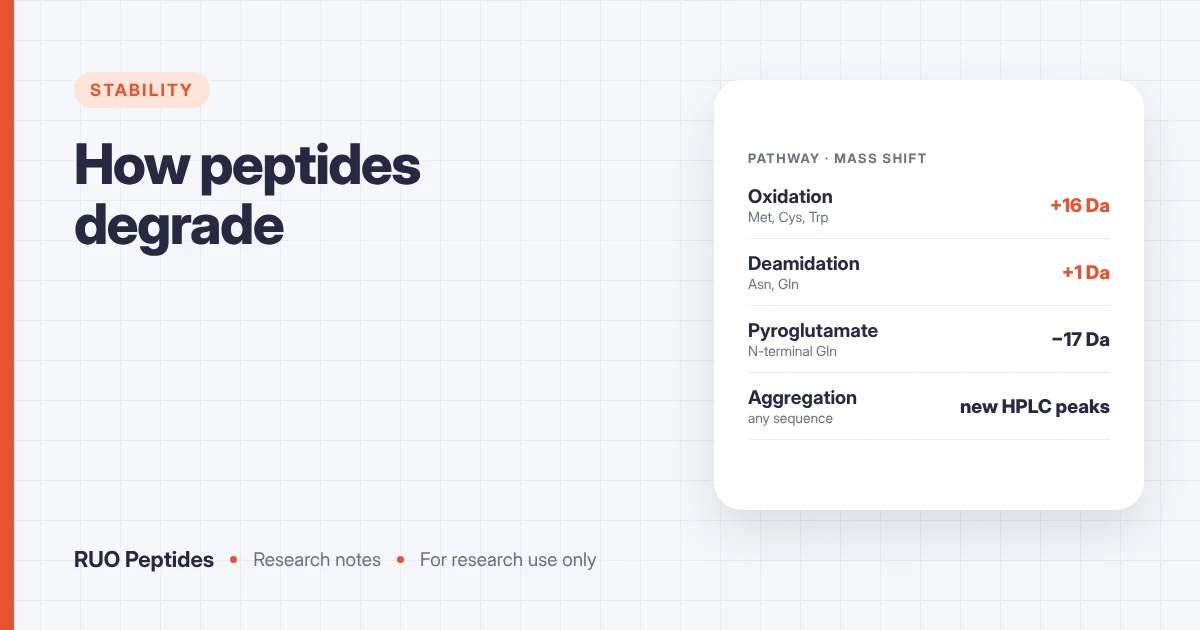
How Do Peptides Degrade?
The main ways research peptides degrade, including oxidation, deamidation, pyroglutamate and aggregation, and how each appears in HPLC and mass spec data.
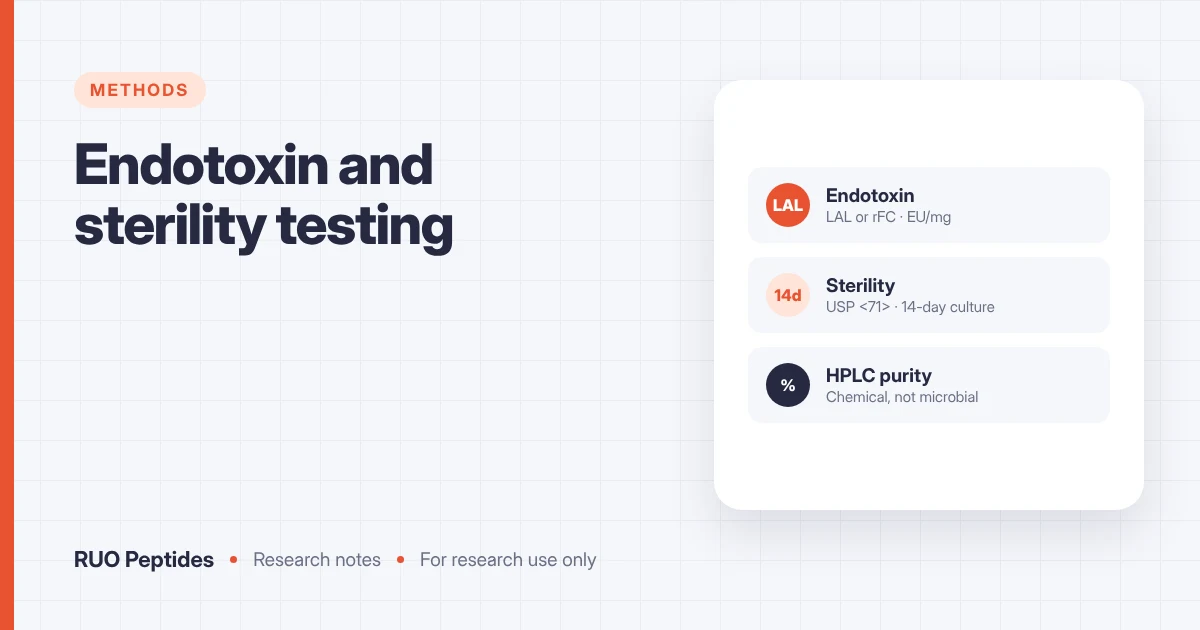
What Is Endotoxin Testing?
HPLC purity says nothing about endotoxin or microbes. How LAL and rFC endotoxin tests and USP 71 sterility tests work, and what they mean for in-vitro labs.
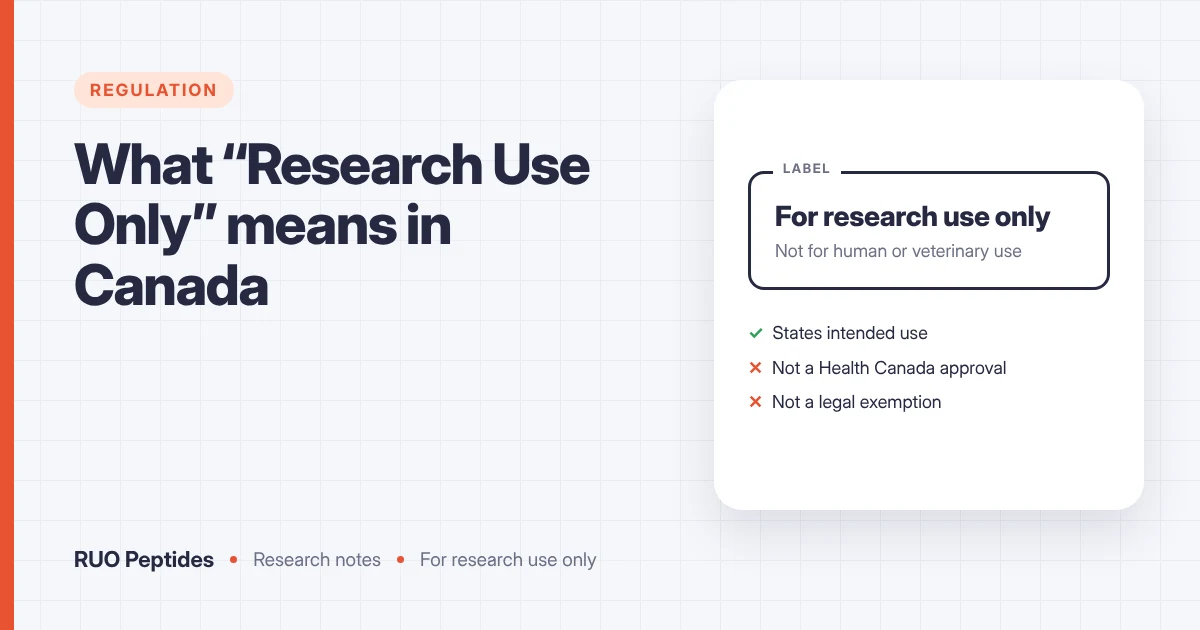
What Does Research Use Only Mean?
A research-use-only label states intended use. It is not a Health Canada approval or a legal exemption. What the label means for Canadian labs in 2026.
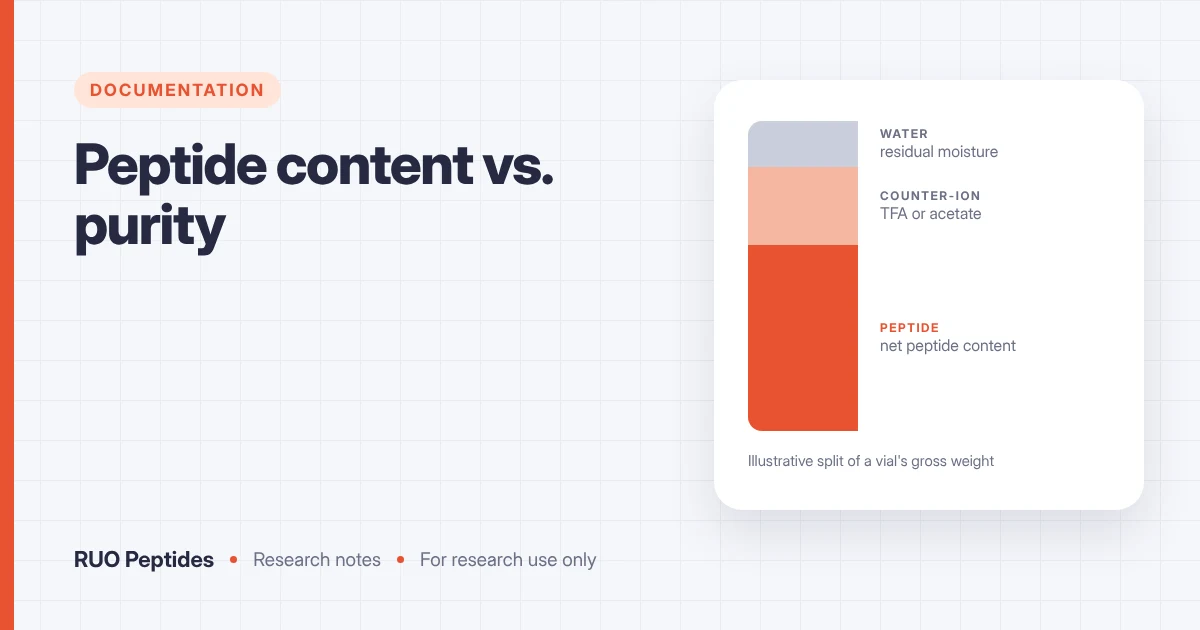
What Is Net Peptide Content?
HPLC purity and net peptide content measure different things. How counter-ions and water affect the weight in a vial, and how to read both on a CoA.
How to Store Lyophilized Peptides
Freeze-drying makes peptides far more stable, but not indestructible. The main threats to a lyophilized vial in transit and storage, and what to check when a shipment arrives.
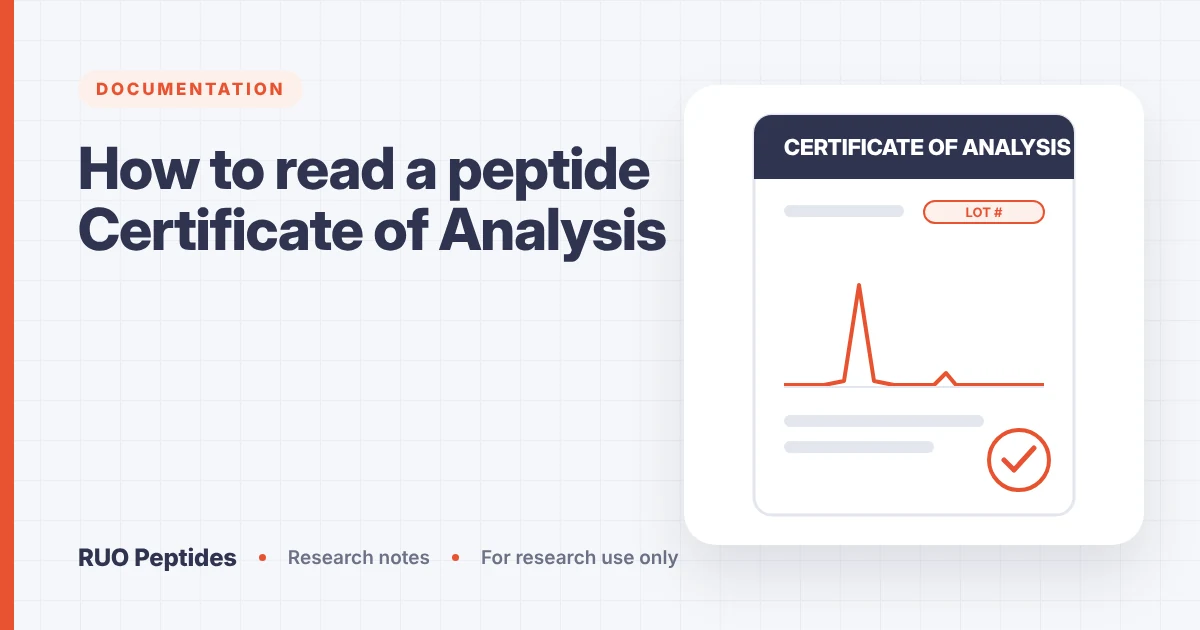
How to Read a Peptide CoA
A Certificate of Analysis puts several separate tests on one page. What each field confirms, what it does not, and how to check that a CoA belongs to the vial in front of you.